Steven Herrera
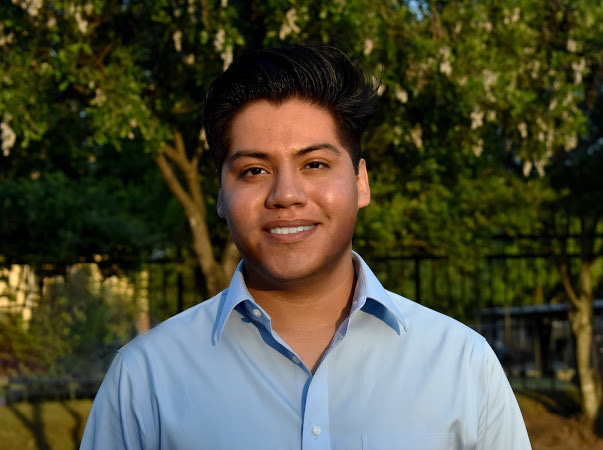
Hi there 👋
Research Interests
Natural Language Processing (NLP), Machine Learning (ML), Large Language Models (LLMs), Retrieval Augmented Generation (RAG), LLM Red Teaming
Education
-
Ph.D., Computer Science Indiana University Bloomington (May 2028) -
M.S., Data Science University of Houston - Clear Lake (May 2023) -
B.S., Physics University of Texas at Austin (Aug 2019)
Work Experience
Intern @ United States Securities and Exchange Commission (September 2022 - Present)
- Developed a web scraper to collect and organize text data from the SEC website where the text may present as a PDF, TXT, HTML, or XML files
- Analyzed text using word clouds, readability metrics, and distribution tests such as normal distribution testing and Kolmogorov-Smirnov testing
- Optimized a probability calibrated ordinal NLP/ML model on imbalanced data that accurately classified text
- Evaluate model results by using the probabilities of a text being classified to each label to determine what the model learned when it classifies correctly, what it needs to learn when it classifies incorrectly, and what text it struggles with when the probabilities are all near equal
- Read scientific articles regarding state-of-the-art ordinal metrics for model evaluation and comparison then wrote these metrics in Python as they were not yet available in any python libraries
- Developed a webpage in JavaScript to generate a table of the NLP/ML model results in a human-readable form
- Hosted a static website using Amazon Web Services (AWS) Simple Storage Service (S3)
- Hosted my NLP/ML model using AWS Sagemaker Endpoint
- Developed an AWS Lambda function to allow stakeholders to retrieve the model’s text classification inference by selecting two parameters from a static website’s dropdown menu
- Implemented AWS API Gateway to allow an AWS Lambda function to communicate with a front-end static website
Certifications
AWS Certified Solutions Architect - Associate Amazon Web Services (August 2024)
- Understanding of AWS services and technologies
- Ability to build secure and robust solutions using architectural design principles based on customer requirements
- Able to strategically design well-architected distributed systems that are scalable, resilient, efficient, and fault-tolerant.
Introduction to Kubernetes The Linux Foundation (July 2024)
- Ability to set up and manage a Kubernetes cluster using Minikube
- Understanding of Kubernetes’ architecture, components, and its evolution from monolithic to microservices architectures
- Knowledge of how to implement container orchestration, manage volumes, and configure network services
Docker Foundations Professional Certificate Docker, Inc (June 2024)
- Understanding of how Docker is used in software development
- Demonstration of using containers in a real-world project
- Knowledge of advanced deployment techniques with Docker Compose
AWS Certified Cloud Practitioner Amazon Web Services (April 2024)
- Validates fundamental understanding of IT services and their uses in the AWS Cloud
- Demonstrated cloud fluency and foundational AWS knowledge.
- Able to identify essential AWS services necessary to set up AWS-focused projects
Data Analytics Certificate Google (July 2021)
- Understanding of the practices and processes used by a junior or associate data analyst in their day-to-day job
- Understand how to clean and organize data for analysis, and complete analysis and calculations using spreadsheets, SQL and R programming
- Learned key analytical skills (data cleaning, analysis, & visualization) and tools (spreadsheets, SQL, R programming, Tableau)
- Learned how to visualize and present data findings in dashboards, presentations and commonly used visualization platforms
Tech Stack
Technologies


Frameworks/Libraries




Tools




Research Experience
Wolf Rayet Star Research (Sep 2017 - May 2019)
Summer Undergraduate Research Fellowship
Undergraduate Researcher
Advisors: Prof. Edward L. Robinson, Prof. Cynthia S. Froning
- Worked on a long series of wolf-rayet star image observations looking for rapid short-term flux variability or stellar pulsations that can be used to infer interior stellar properties for important sources of chemical enrichment within the interstellar medium.
Projects
Real Time Forest Fire Detection with Compressed Deep Learning Models
This project showcases an advanced model compression pipeline for real-time forest fire detection using binary image classification, combining feature knowledge distillation from high-performance teacher models (including ViT, DeiT, and Swin Transformer variants) into a lightweight ShuffleNetV2 student model, followed by INT8 quantization to optimize deployment efficiency. Designed to balance accuracy with resource constraints, the system demonstrates practical implementation of cutting-edge compression techniques—ideal for edge deployment scenarios. The visual verification of quantized model performance on test data highlights its readiness for production.

Coursework
Computer Science
Data Structures, Scripting I (Python), Machine Learning, Big Data Analytics, Deep Learning
Mathematics
Probability, Applied Statistical Methods, Matrices and Matrix Calculations, Integral Calculus for Science, Calculus I, Advanced Calculus II, Multivariable Calculus, Differential Equations with Linear Algebra, Linear Models & Regression Analysis
Social Media